
About the artist

When painting becomes an obvious choice

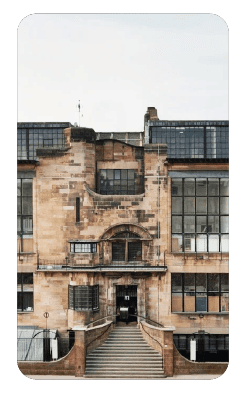
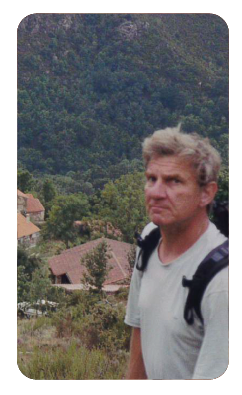
John Goudie Lynch, a painter based in Rodès, knew from his teenage years that painting was his calling. At 16, a work placement at Castle Toward in 1962 confirmed what John already suspected: he would not become an architect. He would become a painter. He studied at the Glasgow School of Art from 1964 to 1968, before dedicating his life entirely to painting.

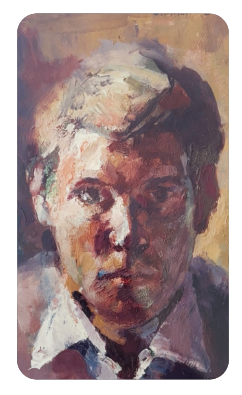
premier autoportrait de l'artiste durant sa jeunesse, peintre à rodès
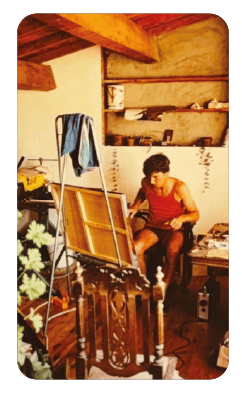
John Goudie Lynch, peintre à Rodès, dans son atelier en pleine création artistique peintre à rodès, John Goudie Lynch

Rooted at the foot of Canigou

Seeking peace and quiet after years caught up in the turmoil of Amsterdam, Goudie and his partner settled in Glorianes. A year later, in 1974, they acquired a house at the top of the village of Rodès, in the Pyrénées-Orientales. As a painter based in Rodès, he established his studio there and has never left.

Recognition beyond borders

Recognised by his peers and celebrated by institutions, John Goudie Lynch gradually established himself as a distinctive figure in contemporary art. From Perpignan to Amsterdam, via Barcelona and Edinburgh, his paintings have travelled far beyond the borders of the Pyrénées-Orientales, exhibited in prestigious venues such as the Royal Castle of Collioure and the Royal Scottish Academy. A discreet artist whose work speaks to those who truly take the time to look — far removed from passing trends, and unwavering in its commitment to his own vision of the world.

Rigaud Museum, 1980
John Goudie Lynch's first major exhibition as a painter based in Rodès, held in Perpignan. The reviews are highly acclaimed.
Prestigious commissions
Official portraits commissioned for prominent political figures, including Pieter Dankert, President of the European Parliament.
Royal Castel of Collioure, 2012
Its two finest rooms were entirely devoted to the work of John Goudie Lynch, offering an immersive journey through his art.
Beyond borders
His work has been exhibited in Amsterdam, Barcelona, Hanover, London, Glasgow, Paris and many other cities...

Goudie.

« I feel almost like a spectator, until a certain form on the canvas gives birth to an idea. »

This quotation, in itself, sums up John Goudie Lynch's entire approach: a form of painting that emerges less from a predetermined plan than from patiently observing what takes shape on the canvas.

Selected Biography

AnnéesExpositions / Événements
1964–1968Glasgow School of Art
1969Jordanhill College of Education
1970–1973Art Teacher, International School of Amsterdam
1971Galerie de Sphinx, Amsterdam
1972–1974Galerie S, Amsterdam
1975, 1976, 1982, 1983Salon d’Automne, Paris
1979Galerie Lieve Hemel, Amsterdam
1980Musée Rigaud, Perpignan
1981Galerie Mokum, Amsterdam
1982Galerie San Vicens, Perpignan
1983Portrait of the Presidium of the European Parliament, Strasbourg
1984De Vaart, Hilversum, Pays-Bas
1985Reflets de l’Art en Roussillon
1987Parlement Européen, Strasbourg
1987–1988Three Artists in Roussillon — Perpignan, Barcelona, Hanover
1988–1993Sala Gaudi, Barcelone 1er Prix — 44 peintres et la Révolution
1989Royal Scottish Academy, Édimbourg
1990–1995Château Royal, Collioure + Musée d’Ystad, Suède
1991Les Petits Formats de Maître Rey
1994Kongegaarden, Korsor, Danemark + Château de Castelnou
1995Galerie Smelik & Stokking — The Hague, Rotterdam, Amsterdam
1996–2007Galerie de l’Olympe, Perpignan
2000–2010De Beyerd, Breda, Pays-Bas
2000Portal Gallery, Londres
2002Galerie Rademaker, Amsterdam
2006Galerie Visio Dell’Arte, Paris
2008Galerie Utrecht (Morren Galleries)
2009Galerie Utrecht Collectie
2010Harms Rolde-Artantique, Utrecht
2012Château Royal, Collioure
2020L’Esprit du Lieu, Musée Rigaud, Perpignan
2025Galerie Descossy, Rodès — 50-year retrospective

Explorer

Discover the works available

His paintings, oil paintings on wood, form a collection of unique works: characters, unconventional scenes and an everyday life transformed into something extraordinary. They reveal themselves throughout the gallery, each carrying the distinctive mark of the artist's hand and eye, without artifice or staging — simply the sincerity of the work itself.